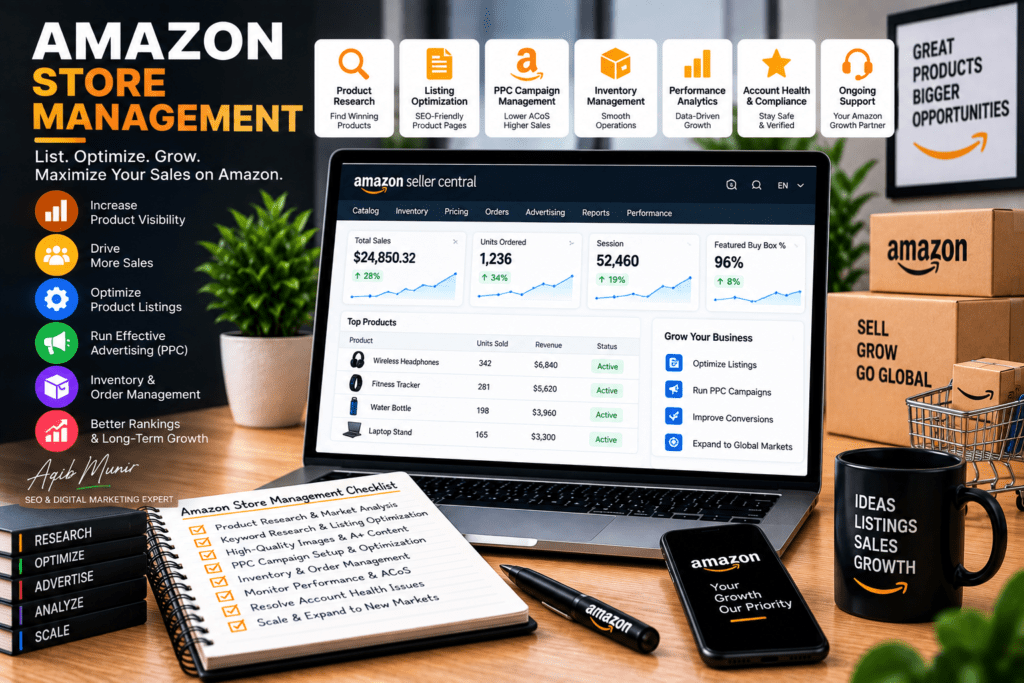

AMAZON STORE MANAGEMENT
Build, Manage & Grow Your Amazon Store.
I help businesses manage and optimize their Amazon presence with better product listings, organized catalogs, SEO-focused content, store optimization and strategies designed to improve visibility, customer experience and online sales.
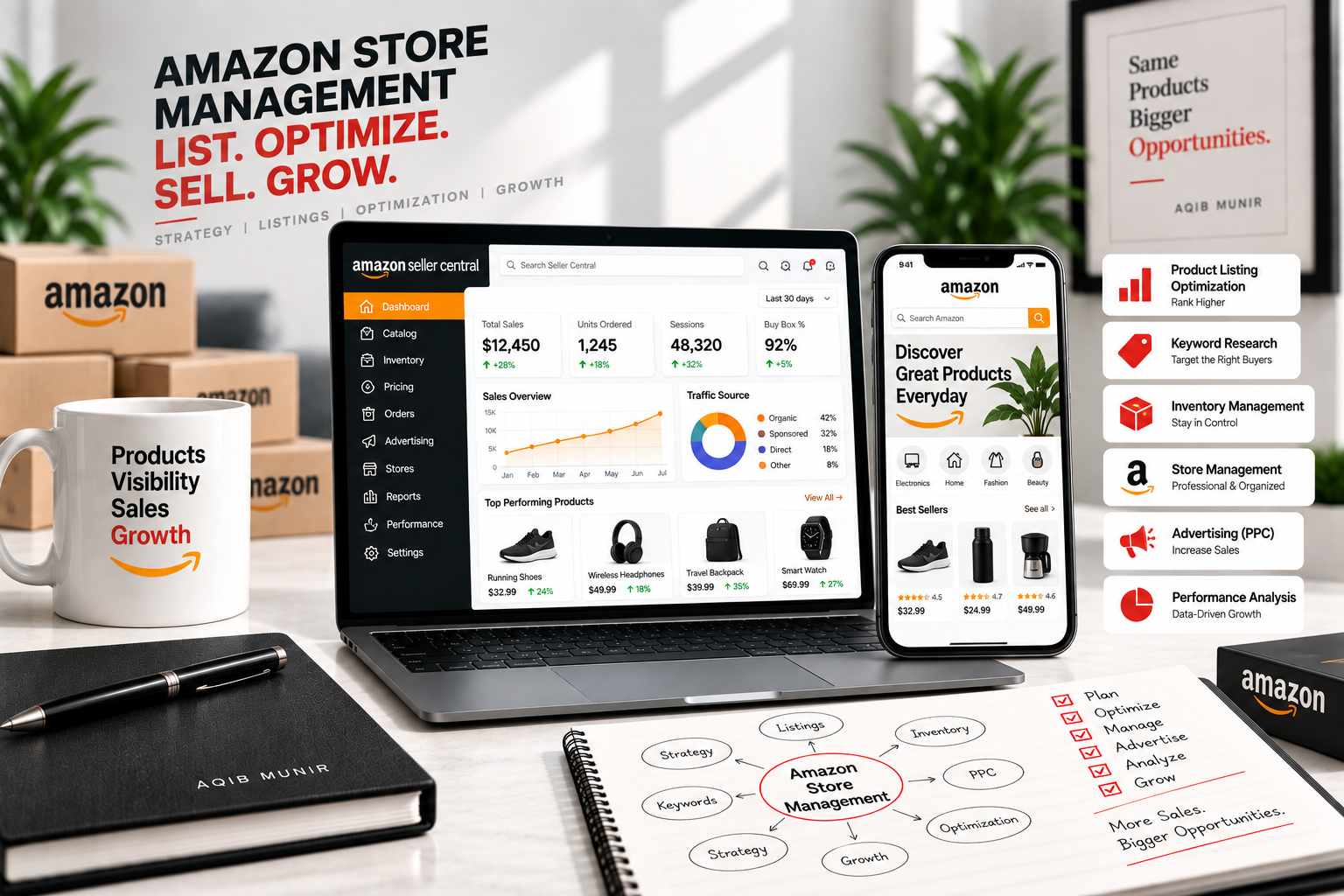
AMAZON GROWTH STRATEGY
Products + SEO + Store + Optimization + Growth
AMAZON MANAGEMENT
A Better Amazon Store Starts With Better Product Management.
Selling on Amazon requires more than simply uploading products. Your product information, titles, descriptions, images, keywords, categories and overall store experience all contribute to how customers discover and evaluate your products.
01
Better Visibility
02
Better Product Pages
03
Better Customer Experience
WHAT I MANAGE
Managing Your Amazon Store Around Business Goals.
From product listings and catalog organization to Amazon SEO and store optimization, I focus on improving the areas that influence visibility, shopping experience and conversions.
01
Amazon Store Management
Organized and structured management of your Amazon store and product catalog.
02
Product Listing Management
Product information structured for customers, search visibility and usability.
03
Amazon Product SEO
Keyword-focused optimization of product titles, descriptions and listing content.
04
Product Title Optimization
Clear and relevant titles designed around search intent and product value.
05
Product Description Optimization
Customer-focused product content that communicates features and benefits clearly.
06
Keyword Research
Researching relevant search terms and opportunities for Amazon product visibility.
07
Catalog Organization
Organizing products, categories and information for a cleaner shopping experience.
08
Store Optimization
Reviewing the overall store experience and identifying areas for improvement.
09
Performance Analysis
Reviewing store and product performance to identify optimization opportunities.
AMAZON STRATEGY
A Better Store Connects Products With Customers.
Every part of an Amazon store should help customers discover, understand, trust and purchase your products.
01
Discover
Improve product visibility through relevant keywords and optimized listings.
02
Explore
Give customers clear product information and an easier shopping experience.
03
Trust
Present products professionally with useful content and consistent information.
04
Convert
Optimize the customer journey to support stronger purchase decisions.
MY PROCESS
From Product Setup to a Better Amazon Experience.
I use a structured approach to understand the store, identify opportunities and continuously improve the areas that matter.
01
Understand the Business
Understand your products, customers, market and business objectives.
02
Review the Amazon Store
Analyze listings, catalog structure, content and overall store presentation.
03
Research Keywords & Competition
Identify relevant search opportunities and understand the competitive landscape.
04
Optimize Product Listings
Improve titles, descriptions, keywords and product content.
05
Improve the Store Experience
Strengthen catalog organization and the overall customer journey.
06
Measure & Optimize
Review performance and continuously identify new opportunities.
CUSTOMER JOURNEY
From Search to Purchase.
Search
→
Product
→
Listing
→
Trust
→
Purchase
→
Customer
WHO I CAN HELP
Amazon Management for Different Business Needs.
Amazon store management can be adapted to different product categories, business models and stages of growth.
New Amazon Stores
Build a structured foundation for launching products on Amazon.
Existing Amazon Sellers
Identify opportunities to improve existing product listings and store performance.
Product-Based Businesses
Improve product presentation, visibility and customer experience.
Multi-Product Stores
Organize larger product catalogs and improve product information.
E-Commerce Businesses
Connect Amazon activity with broader e-commerce and digital marketing strategies.
Growing Online Businesses
Build a stronger Amazon presence as your product range and customer base grow.
WHAT YOU GET
A Structured Approach to Amazon Store Management.
The focus is on building a stronger product presence through better organization, search-focused content, store optimization and continuous improvement.
Amazon store management
Product listing management
Amazon product SEO
Keyword research
Product title optimization
Product description optimization
Product catalog organization
Amazon store optimization
Product content strategy
Competitor research
Store performance analysis
E-commerce optimization
Conversion-focused improvements
Ongoing optimization
LET'S WORK TOGETHER
Ready to Build a Stronger Amazon Store?
Let's discuss your Amazon store, products and growth objectives and identify where optimization can make the biggest difference.
Let's Talk About Your Amazon Store