E-COMMERCE STORE SETUP
E-Commerce Stores Built to Sell, Scale & Grow.
I help businesses build professional e-commerce stores with user-friendly layouts, clear product structures, responsive design and a strong foundation for SEO, marketing and online sales.
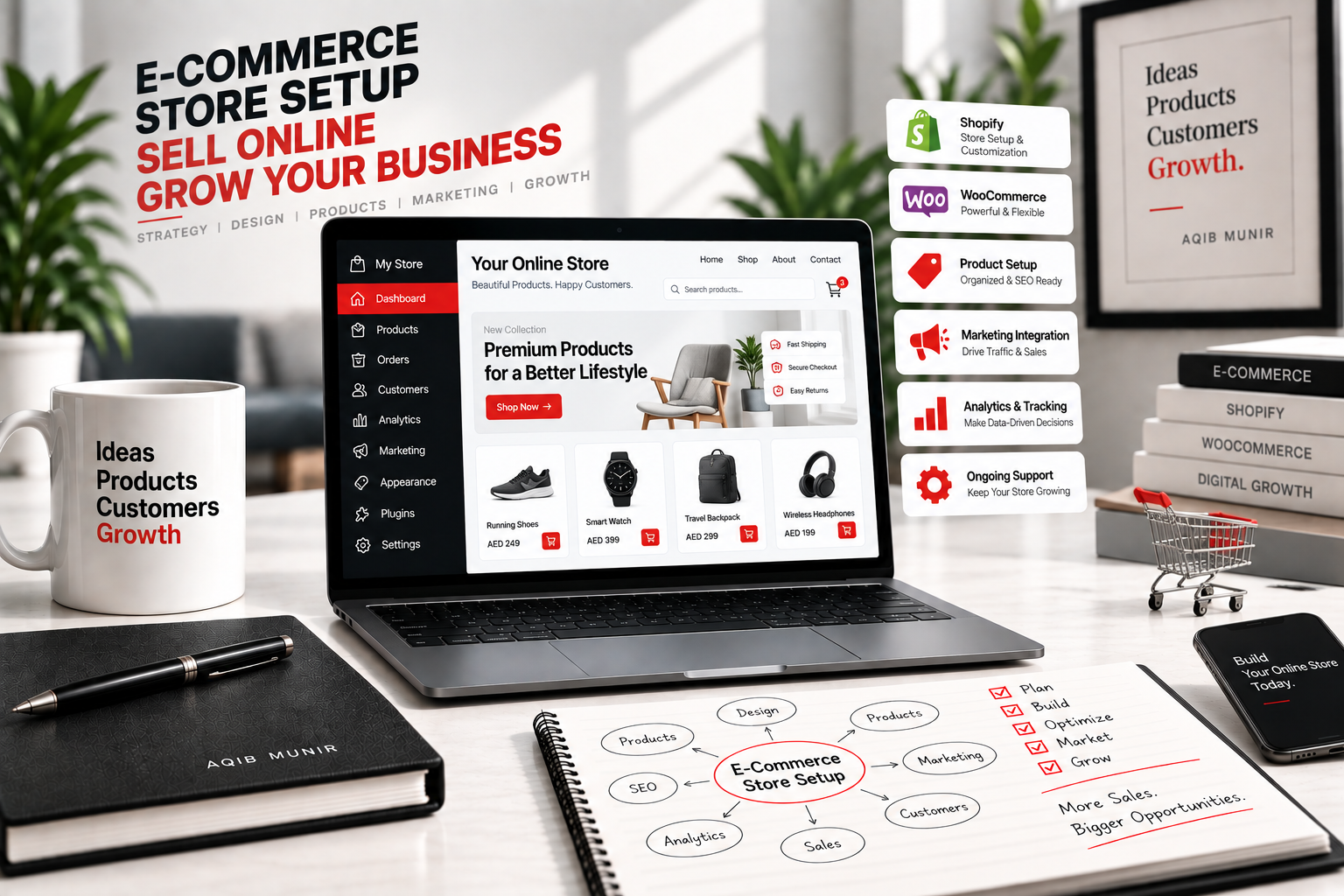
E-COMMERCE STORE STRATEGY
Store + Products + UX + SEO + Conversion
MY APPROACH
An Online Store Should Make Buying Easy.
A successful e-commerce website needs to do more than display products. It should help customers discover products, understand their options and move smoothly toward purchase.
I focus on creating store structures that combine product organization, user experience, mobile responsiveness, SEO and conversion-focused design.
01
Easy Shopping
Clear navigation and product journeys that make browsing simple.
02
Better Products
Structured product pages designed to communicate value clearly.
03
Built to Grow
A scalable store foundation for SEO, marketing and future growth.
WHAT I DO
Building E-Commerce Stores Around Your Business.
From store structure and product setup to optimization and user experience, I can help create an e-commerce presence designed for customers and business growth.
01
E-Commerce Store Setup
Professional online stores structured around your products and business model.
02
Store Design
Clean and modern layouts designed to create a professional shopping experience.
03
Product Setup
Organized product listings with clear information, categories and variations.
04
Category Structure
Logical product categories and navigation that make product discovery easier.
05
Product Page Optimization
Product pages structured around information, trust and conversion.
06
Mobile Shopping Experience
Responsive layouts designed for customers shopping on mobile devices.
07
SEO-Friendly Store Structure
Store architecture designed to support product and category SEO.
08
Conversion-Focused Design
Clear calls to action and shopping journeys designed to reduce friction.
09
Store Optimization
Ongoing improvements to usability, structure, products and customer experience.
E-COMMERCE STRATEGY
A Store Should Connect Products With People.
The strongest e-commerce experiences balance product presentation, usability, trust and conversion throughout the customer journey.
01
Discover
Help customers find the right products through clear navigation and categories.
02
Explore
Give customers the information they need to understand your products.
03
Trust
Build confidence through clear information, design and customer-focused experiences.
04
Convert
Create a smoother path from product discovery to purchase.
MY PROCESS
From Store Concept to a Better Shopping Experience.
I use a structured approach to make sure your store is planned around your products, customers and business objectives.
01 — DISCOVER
Understand the Business
Understand your products, audience, market and e-commerce goals.
02 — PLAN
Plan the Store Structure
Define categories, navigation, product structure and key store pages.
03 — BUILD
Set Up the Store
Build the store layout, product pages and essential e-commerce sections.
04 — OPTIMIZE
Improve the Experience
Refine navigation, product presentation, mobile experience and conversion elements.
05 — TEST
Review the Customer Journey
Check product discovery, shopping flow, responsiveness and usability.
06 — GROW
Prepare for Marketing
Create a stronger foundation for SEO, paid advertising, content and future growth.
The E-Commerce Customer Journey
Discover
→
Browse
→
Product
→
Cart
→
Checkout
→
Customer
E-COMMERCE SOLUTIONS
Store Solutions for Different Business Models.
Your store structure should reflect what you sell, who you sell to and how customers make purchasing decisions.
Product-Based Businesses
Online stores designed to showcase and sell physical products.
WooCommerce Stores
WordPress-based e-commerce stores with flexible product and store management.
Shopify Stores
Shopify store setup and optimization for businesses selling online.
Multi-Category Stores
Structured product catalogs with categories, collections and filtering.
New E-Commerce Businesses
Store foundations for businesses launching their first online sales channel.
Existing Store Optimization
Improving an existing store's structure, usability and shopping experience.
WHAT YOU GET
A Store Built With Growth in Mind.
I focus on creating an e-commerce foundation that can support customers, products, SEO, digital marketing and future business growth.
E-commerce store setup
Store structure planning
Product category setup
Product listing setup
Product page optimization
Store navigation
Responsive store design
Mobile shopping optimization
SEO-friendly store structure
Conversion-focused layouts
WooCommerce store setup
Shopify store setup
E-commerce UX optimization
Store performance review
Ready to Build an E-Commerce Store That Sells?
Let's create a professional online store that makes it easier for customers to discover, trust and purchase your products.
Let's Talk About Your Store