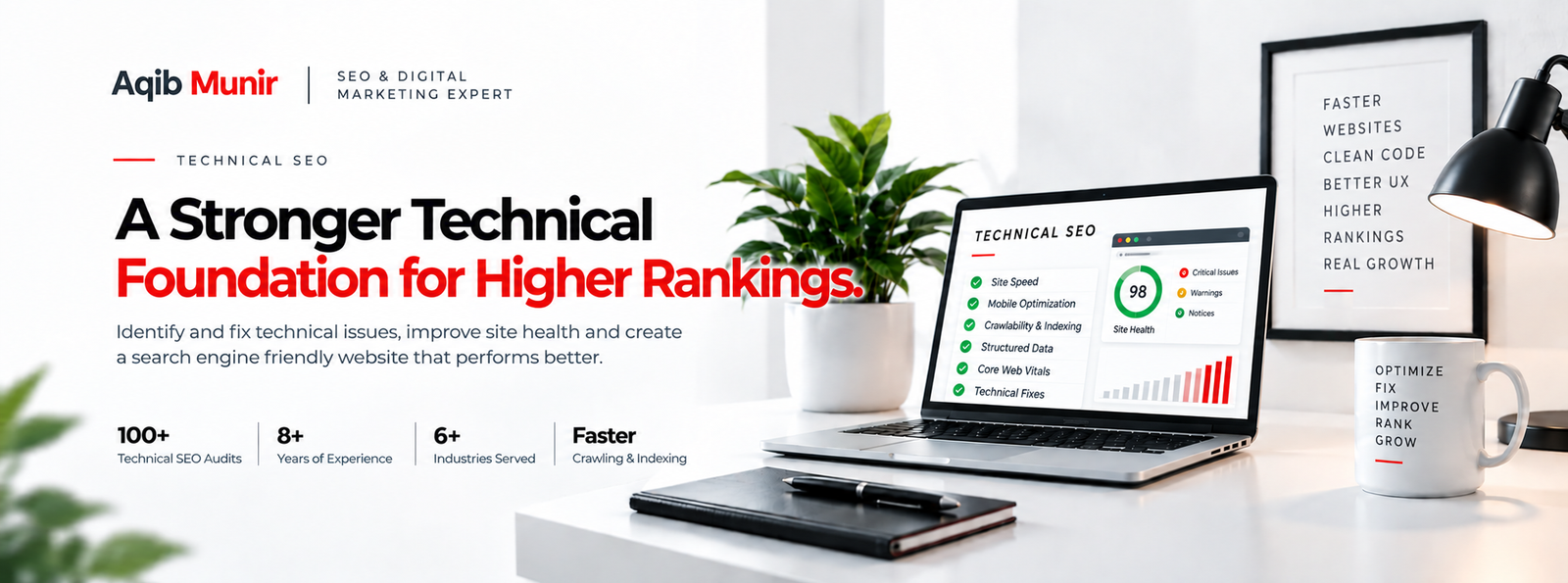
TECHNICAL SEO
Technical SEO That Makes Your Website Search-Ready.
I optimize the technical foundation of your website so search engines can crawl, understand, index, and access your content efficiently while providing users with a better website experience.
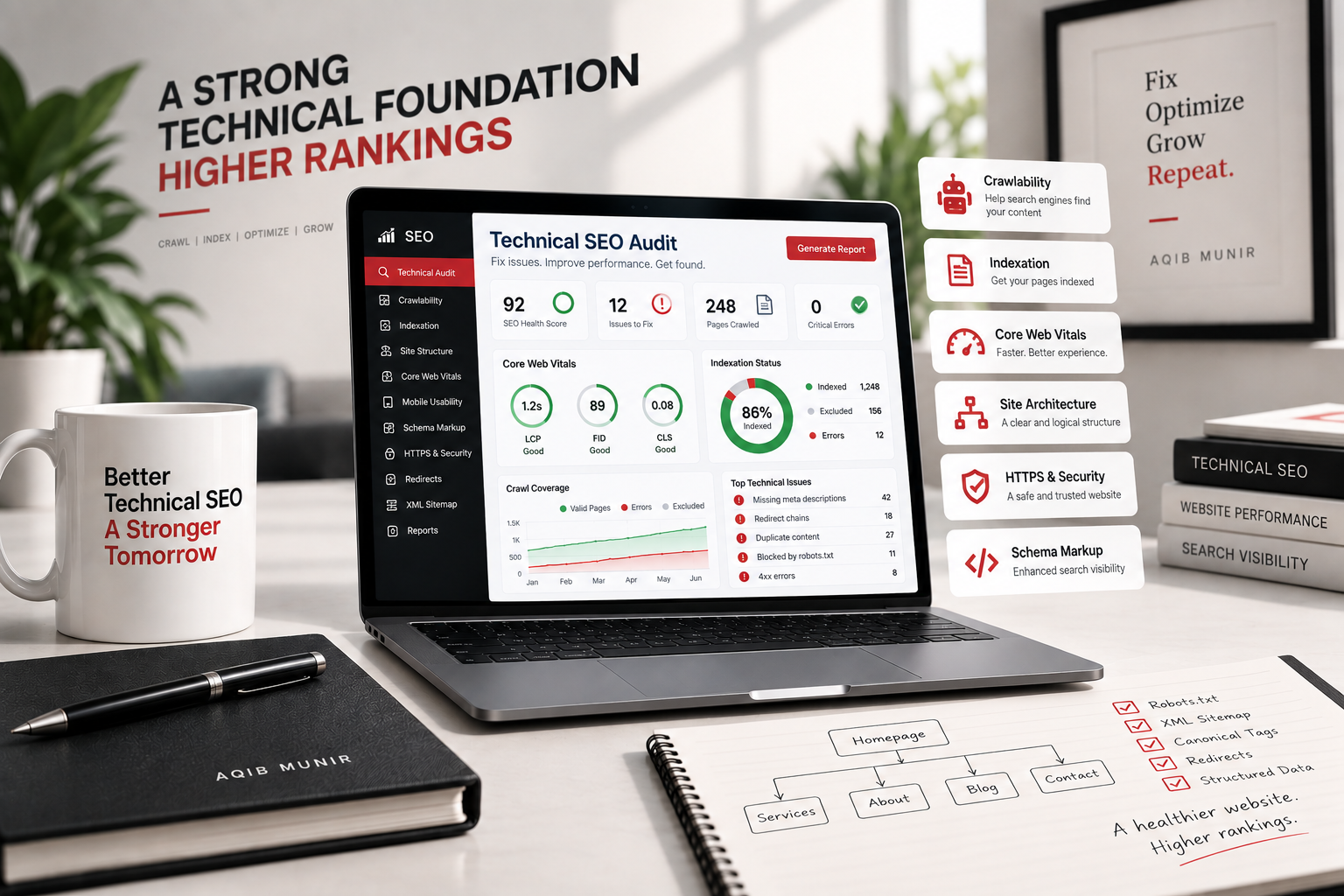
Technical Foundation
Crawl + Index + Performance
THE FOUNDATION
Strong SEO Starts With a Healthy Website.
Technical SEO focuses on the underlying systems and structure that allow search engines to discover, crawl, render, understand, and index your website.
I identify technical issues that may limit organic visibility and provide practical solutions to improve website architecture, crawlability, indexation, performance, and search accessibility.
01
Crawlability
Help search engines efficiently discover important pages and website resources.
02
Indexability
Make sure valuable content can be properly understood and considered for indexing.
03
Performance
Improve technical performance and the overall experience across devices.
WHAT I ANALYZE
Every Technical Layer That Matters.
I examine the technical structure of your website to identify issues that can affect crawling, indexing, performance, usability, and organic search visibility.
Crawlability
Review crawl paths, robots.txt, blocked resources, crawl directives, and website accessibility for search engine crawlers.
Indexation
Identify indexation issues, unwanted indexed pages, canonicalization problems, and important pages that may not be indexed correctly.
Site Architecture
Analyze website hierarchy, navigation, URL relationships, internal linking, and page depth.
Core Web Vitals
Review key page experience and performance factors that can affect how users interact with your website.
XML Sitemaps
Review sitemap structure, URLs included, indexing signals, and alignment with the site's important pages.
Canonicals & Redirects
Analyze canonical tags, redirects, broken URLs, redirect chains, and duplicate URL variations.
Mobile SEO
Review mobile usability, responsive behavior, content accessibility, and technical mobile issues.
Structured Data
Review relevant schema markup and structured data implementation for eligible website content.
HTTPS & Security
Check HTTPS implementation, insecure resources, technical security signals, and common configuration issues.
MY PROCESS
From Technical Audit
To a Healthier Website.
I follow a structured technical SEO process to identify problems, prioritize their impact, and create practical recommendations that support long-term organic growth.
01 — CRAWL
Crawl the Website
Analyze the website's pages, links, status codes, metadata, directives, URLs, and technical structure.
02 — AUDIT
Identify Technical Issues
Find crawlability, indexation, performance, architecture, duplication, and other technical issues.
03 — PRIORITIZE
Assess Business Impact
Prioritize issues according to SEO impact, website importance, complexity, and implementation requirements.
04 — OPTIMIZE
Implement Improvements
Apply or guide technical improvements across the website's important SEO components.
05 — VALIDATE
Test & Validate
Re-crawl and review implemented changes to ensure technical issues have been addressed correctly.
06 — MONITOR
Monitor Technical Health
Continue monitoring important technical signals and identify new issues as the website evolves.
TECHNICAL SEO FLOW
Crawl → Understand → Index → Perform.
A technically healthy website gives search engines a clearer path to discover and understand important content while creating a better experience for users.
Crawl
Discover pages
Render
Process resources
Understand
Interpret content
Index
Store eligible pages
Rank
Evaluate relevance
Experience
Serve users
DIFFERENT WEBSITE NEEDS
Technical SEO for Different Websites.
Technical SEO requirements vary depending on the size, platform, architecture, and purpose of your website.
01 / CORPORATE
Business Websites
Improve architecture, crawlability, indexation, performance, and technical foundations.
02 / E-COMMERCE
E-Commerce Websites
Address product URLs, filters, pagination, canonicalization, duplicate content, and indexation.
03 / WORDPRESS
WordPress Websites
Review WordPress SEO structure, plugins, URLs, performance, sitemap, schema, and technical settings.
04 / SHOPIFY
Shopify Websites
Identify platform-specific SEO considerations around URLs, duplicate pages, collections, products, and indexing.
05 / LARGE SITES
Large Websites
Analyze crawl efficiency, site architecture, internal linking, indexation, and technical scalability.
06 / NEW SITES
New Websites
Establish a clean technical foundation before scaling content and organic search visibility.
TECHNICAL SEO AUDIT
A Clear Roadmap to a Healthier Website.
Depending on your website and requirements, my technical SEO work can include analysis, recommendations, implementation support, and validation.
Crawlability analysis
Indexation analysis
Robots.txt review
XML sitemap review
Canonical analysis
Redirect analysis
Broken link analysis
Site architecture review
Internal linking review
Core Web Vitals review
Mobile SEO review
Structured data review
HTTPS & security review
Duplicate content analysis
URL structure review
Technical SEO recommendations
READY TO FIX THE FOUNDATION?
Is Your Website
Technically Ready for SEO?
Let’s identify the technical issues affecting your website and build a cleaner, more accessible foundation for sustainable organic search growth.
Let’s Talk About Your SEO Strategy →