ON-PAGE SEO
On-Page SEO That Makes Your Website Search-Ready.
I optimize the structure, content, and key on-page elements of your website to make it easier for search engines to understand and easier for users to navigate, discover, and convert.
SEO Focus
Content + Structure
THE FOUNDATION
Great Content Needs Strong SEO Structure.
On-page SEO is about more than adding keywords to a page. It is about creating a clear relationship between your content, search intent, website structure, and what search engines need to understand your page.
I optimize important on-page elements so each page has a clear purpose, targets the right search intent, and provides a better experience for both users and search engines.
01
Search Intent
Aligning content with what users actually want to find.
02
Content Relevance
Improving topical relevance, depth, and keyword coverage.
03
Page Structure
Creating a logical structure that supports crawling and usability.
WHAT I OPTIMIZE
Every Important On-Page Element.
I review the elements that influence relevance, crawlability, usability, and how clearly a page communicates its topic and purpose.
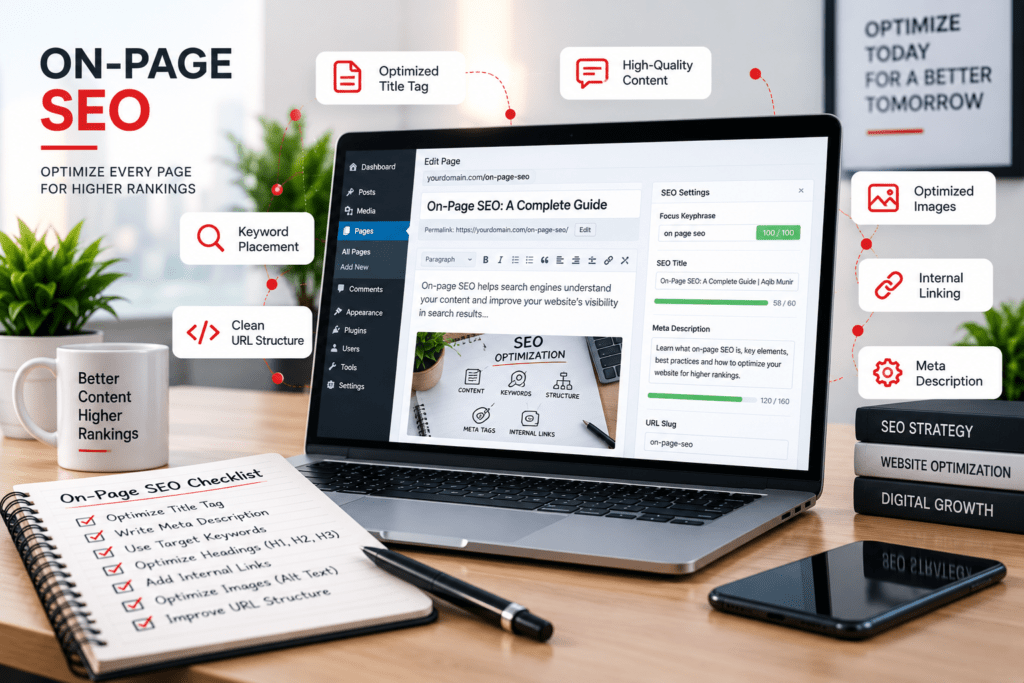
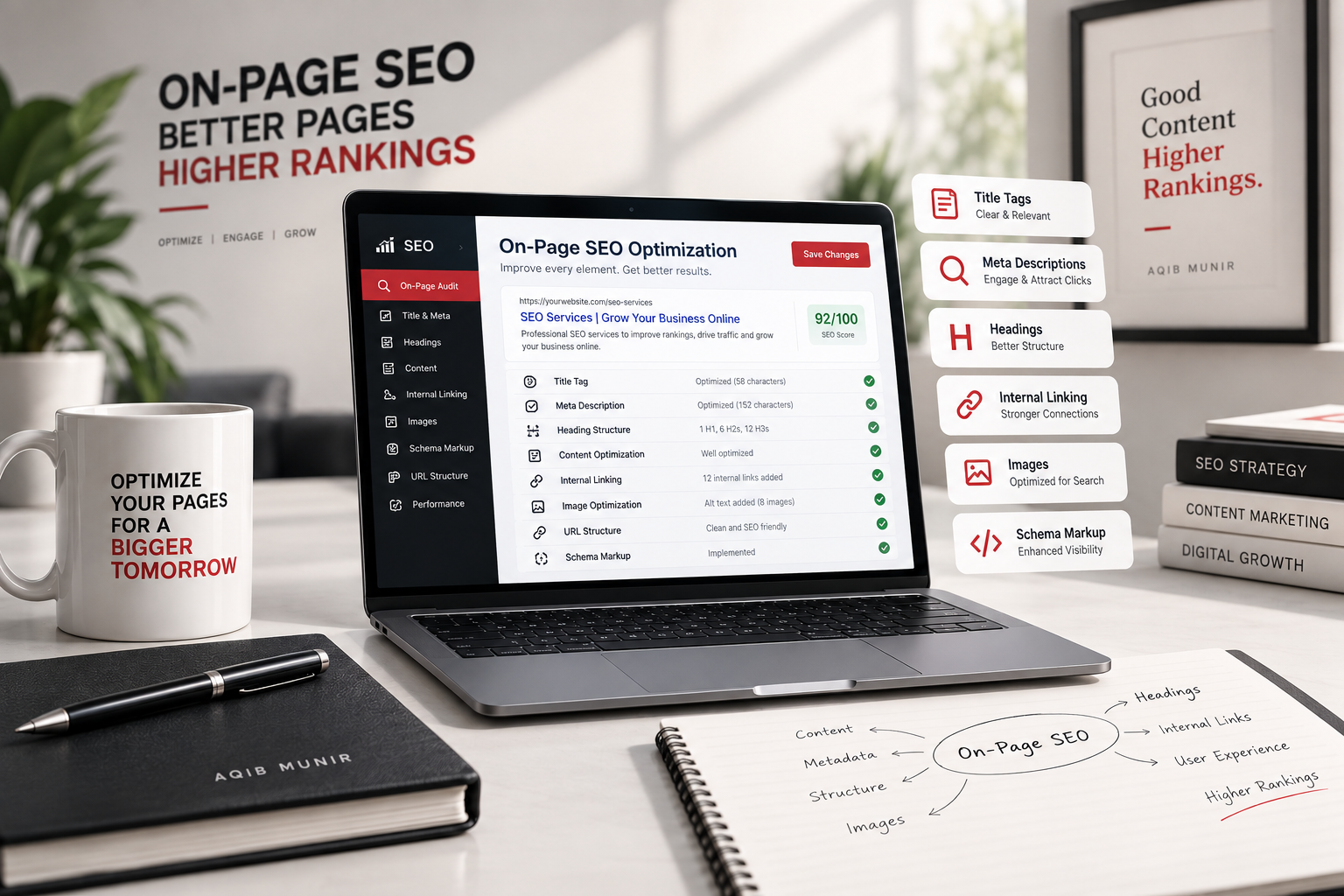
Title Tags
Optimized page titles that clearly communicate the primary topic and support stronger search relevance.
Meta Descriptions
Relevant and compelling descriptions designed to accurately summarize the page and encourage qualified clicks.
Headings & Structure
Logical H1, H2, and H3 structures that improve content organization and make topics easier to understand.
Content Optimization
Improving content relevance, depth, readability, entities, terminology, and natural keyword usage.
Internal Linking
Building meaningful internal links that connect related pages and help users and search engines discover content.
URLs & Images
Reviewing URL structure, image relevance, filenames, alt text, and other supporting page elements.
MY PROCESS
From SEO Audit
To Page Optimization.
My on-page SEO process combines search intent, keyword research, content analysis, technical considerations, and user experience to create pages that are clearer and more useful.
01 — ANALYZE
Review the Existing Page
I assess the current content, structure, metadata, headings, internal links, URLs, images, and overall optimization.
02 — UNDERSTAND
Identify Search Intent
I determine what users expect from the query and what type of content best satisfies that intent.
03 — MAP
Align Keywords & Topics
Primary and supporting keywords are mapped naturally to the page based on relevance and search intent.
04 — OPTIMIZE
Improve Page Elements
Titles, headings, content, internal links, URLs, images, metadata, and other relevant elements are refined.
05 — ENHANCE
Improve User Experience
I make the content easier to scan, understand, navigate, and act on across different devices.
06 — MONITOR
Measure & Refine
Search performance and user signals can be reviewed to identify further opportunities for improvement.
OPTIMIZATION FLOW
Search Intent → Content → Better Page Structure.
Effective on-page SEO connects what people search for with the content and structure of the page they land on.
Search Query
What users search
Search Intent
Why they search
Target Page
Where they land
Content
What they need
Optimization
How it is structured
User Action
What happens next
BUILT FOR DIFFERENT WEBSITES
On-Page SEO Based on Your Business.
Different websites have different search journeys. I adapt on-page SEO recommendations according to the website type, business goals, content structure, and target audience.
01 / LOCAL
Local SEO
Optimize service pages and location-focused content to strengthen local search relevance.
02 / E-COMMERCE
E-Commerce SEO
Improve product, category, collection, and supporting pages for stronger organic visibility.
03 / SERVICES
Service Websites
Build focused service pages that clearly communicate expertise, relevance, and business value.
04 / B2B
B2B Websites
Structure complex services and solutions around relevant commercial search journeys.
05 / CONTENT
Blogs & Content Sites
Improve content structure, topical relevance, internal linking, and search intent alignment.
06 / NEW WEBSITES
New Websites
Establish a clean on-page foundation before publishing and scaling organic content.
WHAT YOU GET
A Clearer, Better Optimized Website.
Depending on your website and requirements, my on-page SEO work can include a detailed review and optimization of the following areas.
Keyword-to-page mapping
Title tag optimization
Meta description optimization
Heading structure
Content optimization
Search intent alignment
Internal linking
URL structure
Image SEO & alt text
Content hierarchy
Entity & topical relevance
SEO recommendations
READY TO OPTIMIZE?
Is Your Website
Fully Optimized for Search?
Let’s review your website and identify the on-page SEO opportunities that can improve relevance, structure, usability, and organic search performance.
Let’s Talk About Your SEO Strategy →