EMAIL MARKETING
Emails That Build Relationships & Results.
I create email marketing strategies that help businesses communicate with their audience, nurture leads, promote products and services, strengthen customer relationships and drive meaningful conversions.
Email Growth Strategy
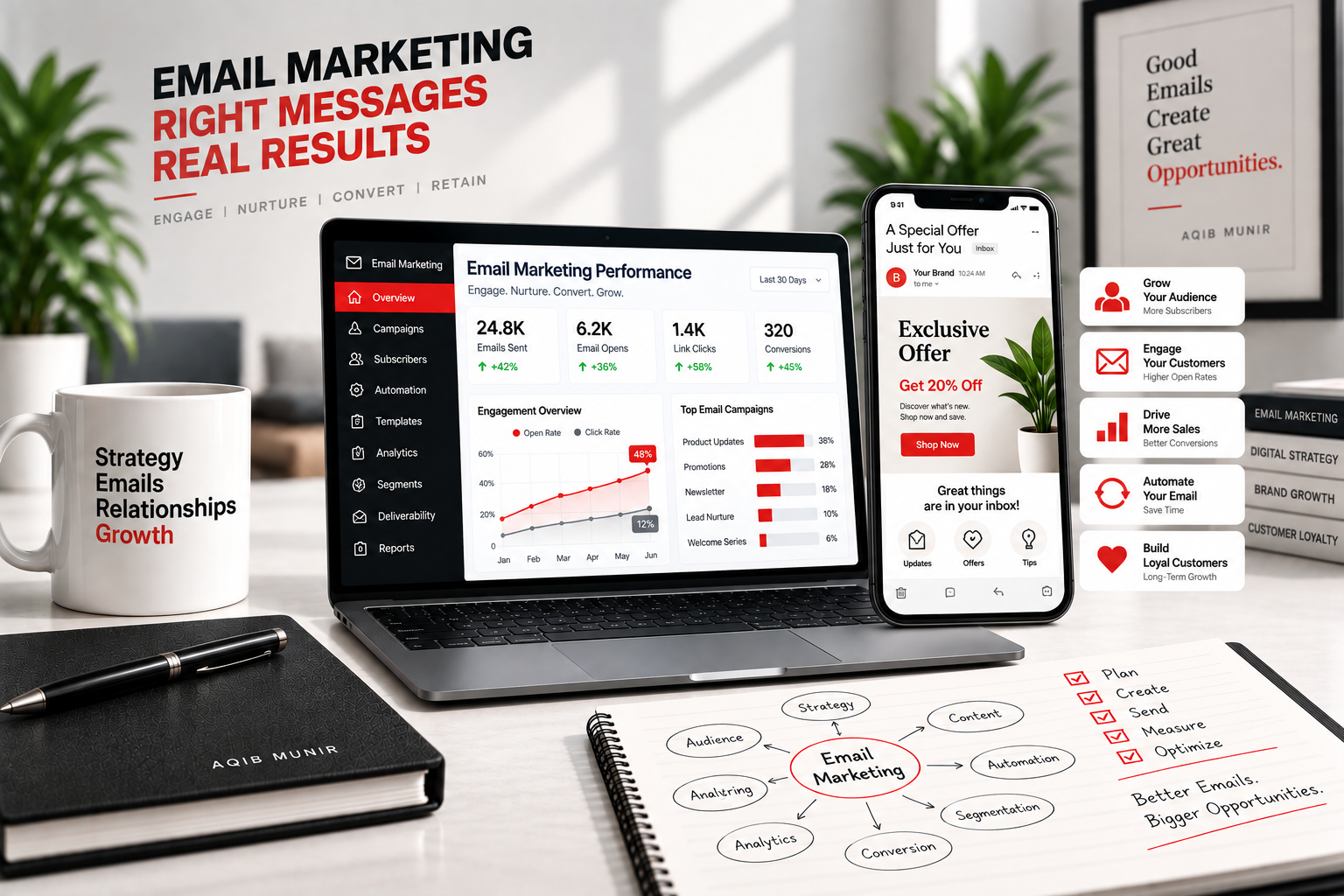
Reach + Nurture + Convert + Retain
THE RIGHT APPROACH
Email Marketing Is About the Right Message at the Right Time.
Effective email marketing is not about sending more emails. It is about understanding the audience, creating relevant communication and building a customer journey that supports awareness, engagement, conversion and retention.
01
Relevance
Deliver useful and relevant messages based on the audience, business objective and customer journey.
02
Engagement
Build stronger relationships through consistent, valuable and well-structured communication.
03
Conversion
Guide subscribers toward enquiries, purchases, bookings or other meaningful business actions.
WHAT I DO
Building Email Campaigns Around Business Goals.
From strategy and campaign planning to lead nurturing and performance analysis, I can manage the key elements of an effective email marketing program.
01
Email Marketing Strategy
Develop an email strategy aligned with business goals, audience needs and the customer journey.
02
Email Campaigns
Plan campaigns for promotions, education, announcements, engagement and customer communication.
03
Newsletter Marketing
Create structured newsletters designed to keep audiences informed, engaged and connected with the brand.
04
Lead Nurturing
Build communication sequences that help move prospects from initial interest toward conversion.
05
Email Automation
Structure automated communication around relevant customer actions and stages of the journey.
06
Promotional Emails
Plan promotional communication for products, services, offers and marketing campaigns.
07
Customer Retention
Use email communication to maintain relationships and encourage continued customer engagement.
08
Segmentation
Organize audiences into relevant segments to improve message relevance and campaign effectiveness.
09
Performance Analysis
Analyze campaign performance and identify opportunities to improve engagement and conversions.
CUSTOMER JOURNEY
Every Email Should Move the Customer Forward.
Different customers need different communication. I structure email marketing around the stage of the customer journey and the action the business wants the audience to take.
01
Awareness
Introduce the brand, products, services or valuable information to new subscribers.
02
Engagement
Deliver useful content that keeps subscribers interested and connected with the brand.
03
Nurturing
Build a sequence of relevant communication for prospects who need more information before making a decision.
04
Conversion & Retention
Encourage action while continuing to build relationships with existing customers.
MY PROCESS
From Strategy to Measurable Email Performance.
A structured process helps ensure every campaign has a clear audience, message, objective and measurement framework.
STEP 01
Understand
Understand the business, audience, products, services and marketing objectives.
STEP 02
Segment
Identify relevant audience groups and define the communication approach for each segment.
STEP 03
Plan
Develop campaign themes, email sequences, offers and communication schedules.
STEP 04
Create
Develop clear email content and calls to action aligned with the campaign objective.
STEP 05
Launch
Deploy campaigns and automated sequences to the appropriate audience segments.
STEP 06
Measure & Optimize
Review campaign data and continuously improve messaging, targeting and performance.
EMAIL JOURNEY
Turning Subscribers Into Engaged Customers.
A strong email strategy connects content, timing and customer intent to create a more useful communication journey.
Subscriber
→
Welcome
→
Engage
→
Nurture
→
Convert
→
Retain
CAMPAIGN TYPES
Email Campaigns for Different Business Objectives.
Different campaign formats can support different stages of the customer journey.
Welcome Emails
Introduce new subscribers to the brand and establish the first communication.
Newsletters
Share useful content, updates, insights and brand communication on a consistent basis.
Promotional Campaigns
Communicate relevant offers, products, services and seasonal promotions.
Lead Nurturing
Educate and engage prospects through structured email sequences.
Product Updates
Keep customers informed about new products, features and important updates.
Customer Retention
Maintain customer relationships and encourage repeat engagement.
PERFORMANCE
Measure What Matters.
Email performance should be evaluated through meaningful engagement and business outcomes rather than simply focusing on the number of emails sent.
01
Open Rate
02
Click Rate
03
Engagement
04
Conversions
05
Leads
06
Revenue
07
Unsubscribe Rate
08
Campaign ROI
MY DELIVERABLES
What I Can Manage for Your Email Marketing.
Email marketing strategy
Email marketing audit
Audience segmentation
Campaign planning
Newsletter strategy
Promotional campaigns
Lead nurturing campaigns
Email automation strategy
Welcome email sequences
Customer retention campaigns
Email content planning
Conversion-focused messaging
Campaign performance analysis
Email performance optimization
Ready to Build a Smarter Email Strategy?
Let's create an email marketing strategy that helps you communicate better, nurture your audience and turn more opportunities into customers.
Let's Talk About Email Marketing