CONTENT MARKETING
Content That Attracts, Engages & Converts.
I create strategic, search-focused content that helps businesses attract the right audience, answer real questions, strengthen organic visibility, and turn website traffic into meaningful business opportunities.
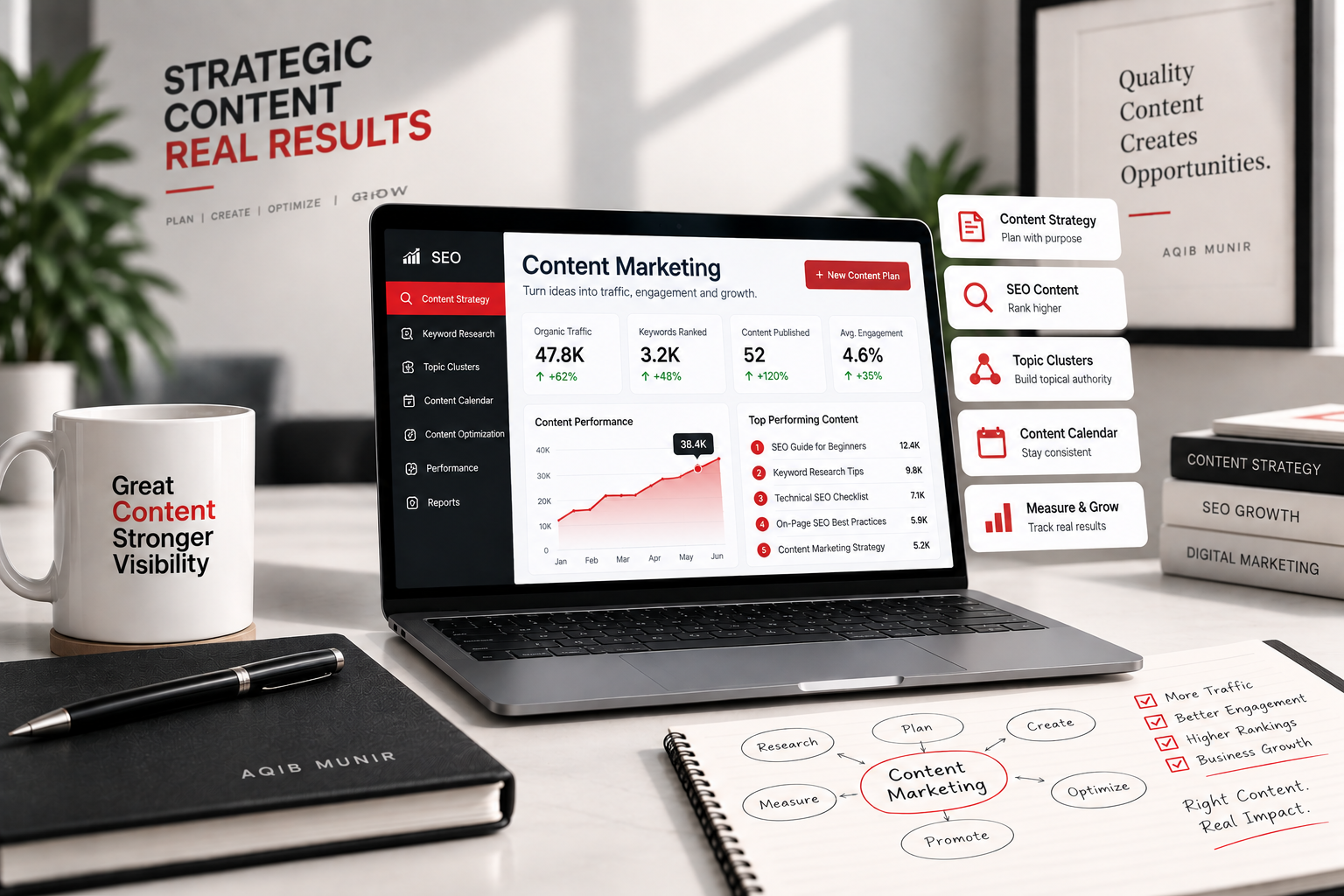
Content Strategy
Research + Intent + Value + Growth
THE RIGHT CONTENT
Content Should Do More Than Fill a Website.
Effective content connects what people are searching for with what a business offers.
I approach content marketing from both a search and business perspective. Instead of creating content simply to publish more pages, I focus on topics that have a clear purpose, satisfy search intent, and support the overall customer journey.
From SEO landing pages and blog content to topic clusters, product content, and conversion-focused website copy, the goal is to build a useful content ecosystem that supports long-term organic growth.
Search Intent
Create content around what users actually want to know or do.
Business Relevance
Connect content topics with products, services and business goals.
Long-Term Value
Build useful resources that can continue attracting qualified traffic.
WHAT I DO
Building Content Around Strategy, Not Just Keywords.
Every piece of content should have a purpose within the wider SEO and digital marketing strategy.
01
Content Strategy
Build a structured content strategy aligned with search demand, audience needs and business objectives.
02
SEO Content
Create search-focused content designed to improve relevance, visibility and organic discovery.
03
Topic Clusters
Organize related topics into content clusters that build depth and strengthen topical relevance.
04
Website Content
Improve service, landing and supporting pages with clearer, more useful and conversion-focused messaging.
05
Blog Content
Develop informative blog topics that answer audience questions and support the SEO content funnel.
06
Content Optimization
Improve existing content through better structure, intent alignment, internal linking and on-page optimization.
MY PROCESS
From Research to Content That Has a Purpose.
A structured approach helps ensure every content opportunity supports the bigger digital strategy.
STEP 01
Understand the Business
Understand the business model, audience, services, products and objectives.
STEP 02
Research Opportunities
Identify relevant topics, keywords, questions and content gaps.
STEP 03
Map Search Intent
Match each topic with the intent and journey of the target audience.
STEP 04
Build the Content Plan
Prioritize topics and organize them into a practical content roadmap.
STEP 05
Create & Optimize
Develop useful content and optimize it for users and search engines.
STEP 06
Measure & Improve
Review performance, identify opportunities and continuously improve valuable content.
CONTENT STRATEGY
Turning Search Demand Into Useful Content.
The objective is to connect search behavior with relevant content and meaningful business outcomes.
Research
→
Search Intent
→
Topic
→
Content
→
Optimization
→
Growth
CONTENT TYPES
Content for Different Business Needs.
The right content format depends on the audience, business model and stage of the customer journey.
SEO Blog Content
Informative articles built around relevant search topics and questions.
Service Pages
Clear, relevant content that explains services and supports organic visibility.
Landing Pages
Focused pages designed around a specific audience, search intent or offer.
E-Commerce Content
Product and category content designed to support discovery and purchasing decisions.
Topic Clusters
Connected content structures that develop topical depth around important subjects.
AI Search Content
Structured, useful content designed to improve visibility across evolving search experiences.
WHAT YOU GET
A Content Strategy Built to Support Growth.
Depending on the project, content marketing can include strategy, planning, creation, optimization and performance improvement.
✓
Content strategy and roadmap
✓
Content topic research
✓
Search intent analysis
✓
Keyword-to-content mapping
✓
Topic cluster planning
✓
SEO blog strategy
✓
Website content optimization
✓
Landing page content
✓
E-commerce content strategy
✓
Internal linking recommendations
✓
Existing content optimization
✓
Content performance recommendations
Is Your Content Working Hard Enough?
Let’s build a content strategy that supports SEO, audience engagement and long-term digital growth.