SOCIAL MEDIA MARKETING
Social Media That Builds Real Connections.
I create and manage social media strategies that help businesses build visibility, engage the right audience, strengthen their brand presence and turn social attention into meaningful business opportunities.
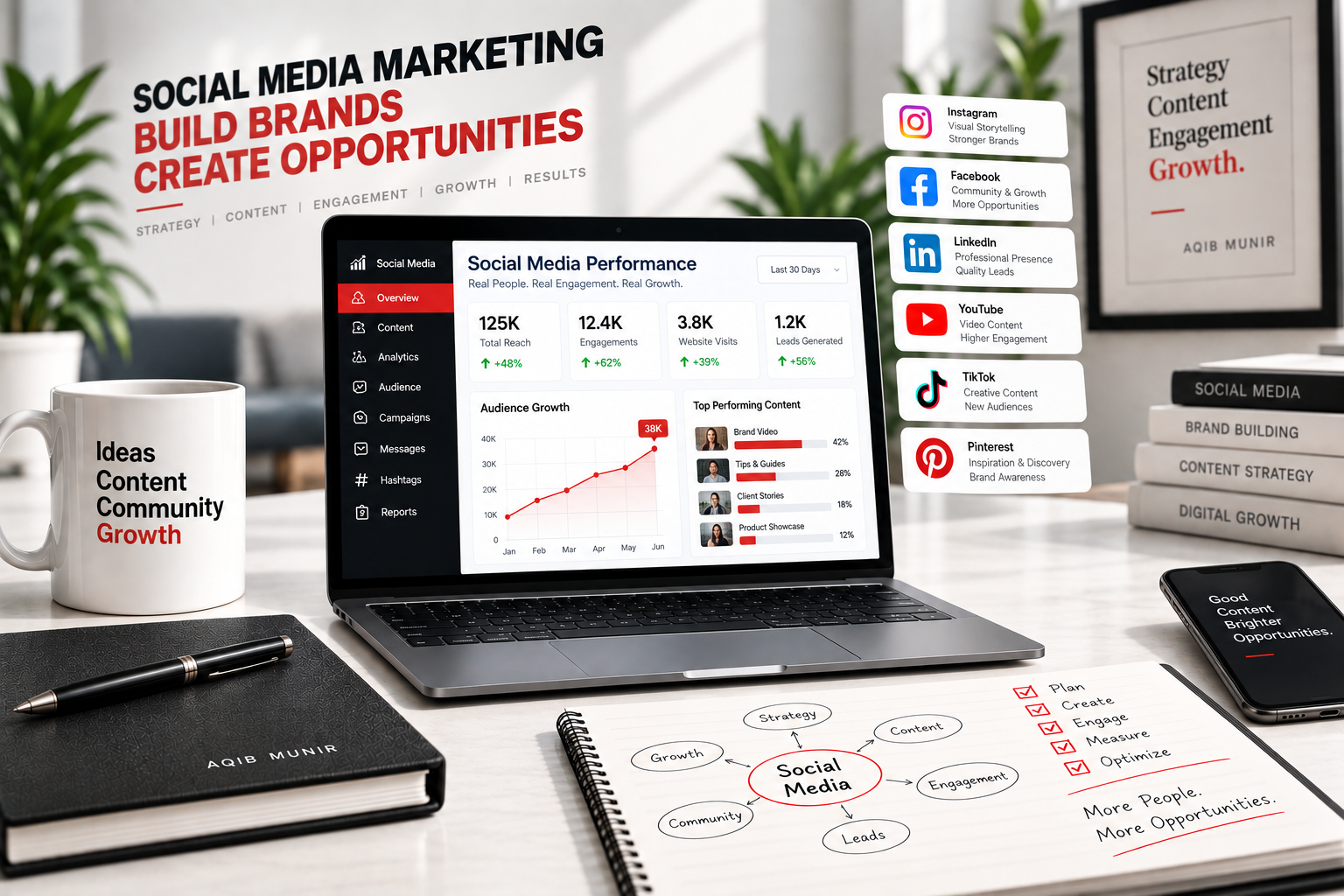
Social Growth Strategy
Plan + Create + Engage + Grow
THE RIGHT APPROACH
Social Media Is More Than Just Posting.
Effective social media marketing starts with understanding the audience, the brand and the business objective. I build social strategies around relevant content, consistent communication, audience engagement and measurable business goals.
01
Audience
Understand who your audience is, what they care about and what type of content gets their attention.
02
Content
Create useful, relevant and engaging content that supports the brand and communicates the right message.
03
Growth
Use data, engagement and campaign insights to improve reach, leads, conversions and overall social performance.
WHAT I DO
Building a Stronger Social Presence.
From strategy and content planning to campaign management and performance analysis, I can manage the key elements of a business's social media presence.
01
Social Media Strategy
Develop a clear strategy aligned with business goals, audience needs and brand positioning.
02
Content Planning
Build structured content plans and calendars around relevant topics, campaigns and objectives.
03
Social Media Content
Create content concepts for posts, carousels, short-form videos, stories and other social formats.
04
Community Engagement
Improve audience interaction through consistent communication, engagement and community management.
05
Social Media Advertising
Support paid social campaigns designed around awareness, traffic, leads and conversions.
06
Campaign Management
Plan, monitor and optimize social campaigns based on performance data and business objectives.
07
Brand Awareness
Strengthen online visibility and create a consistent brand presence across relevant social channels.
08
Lead Generation
Connect social media activity with landing pages, offers and conversion-focused campaigns.
09
Performance Analysis
Review reach, engagement, traffic, leads and campaign performance to identify opportunities for improvement.
SOCIAL STRATEGY
Connecting Content With Business Goals.
Social media should have a purpose beyond likes and followers. I connect content and campaigns with the stage of the customer journey and the business objective.
01
Awareness
Reach relevant audiences and increase visibility for the brand, products or services.
02
Engagement
Build meaningful interaction through relevant content and consistent communication.
03
Consideration
Use educational and persuasive content to help audiences understand the value of the offer.
04
Conversion
Guide interested users toward enquiries, leads, purchases or other desired actions.
MY PROCESS
From Strategy to Social Growth.
A structured process keeps social media focused, consistent and connected to measurable objectives.
STEP 01
Understand
Analyze the business, audience, competitors and current social media presence.
STEP 02
Research
Identify audience interests, content opportunities, trends and competitive gaps.
STEP 03
Plan
Build content themes, campaigns, publishing plans and channel-specific strategies.
STEP 04
Create
Develop relevant content and creative concepts aligned with the brand and audience.
STEP 05
Publish & Engage
Maintain consistent publishing and engage with the audience across selected platforms.
STEP 06
Measure & Optimize
Analyze performance and continuously improve the strategy based on data and results.
DIGITAL ECOSYSTEM
Social Media Works Better When It Connects With Everything Else.
Social content can support SEO, website traffic, paid campaigns, lead generation and overall digital marketing performance.
Content
→
Social Media
→
Audience
→
Website
→
Leads
→
Conversions
SOCIAL CHANNELS
The Right Platform for the Right Audience.
Different platforms serve different audiences and business objectives. The strategy should determine where the brand needs to be active.
Facebook
Community building, awareness, engagement and paid social campaigns.
Instagram
Visual storytelling, brand awareness, engagement and product promotion.
LinkedIn
B2B marketing, professional branding, thought leadership and lead generation.
YouTube
Video content, education, brand discovery and long-form engagement.
TikTok
Short-form content, discovery, awareness and audience engagement.
Other Channels
Platform selection based on the business, audience and marketing objectives.
WHAT SOCIAL CAN SUPPORT
Beyond Likes and Followers.
01
Brand Awareness
02
Engagement
03
Website Traffic
04
Lead Generation
05
Conversions
06
Community
07
Brand Authority
08
Customer Retention
MY DELIVERABLES
What I Can Manage for Your Social Media.
Social media strategy
Social media audit
Content strategy
Content calendar
Social media content planning
Campaign planning
Social media advertising
Audience targeting
Community engagement
Lead generation campaigns
Brand awareness campaigns
Performance analysis
Social media reporting
Content performance optimization
Ready to Build a Stronger Social Presence?
Let's create a social media strategy that supports your brand, engages the right audience and contributes to your wider digital marketing goals.
Let's Talk About Social Media