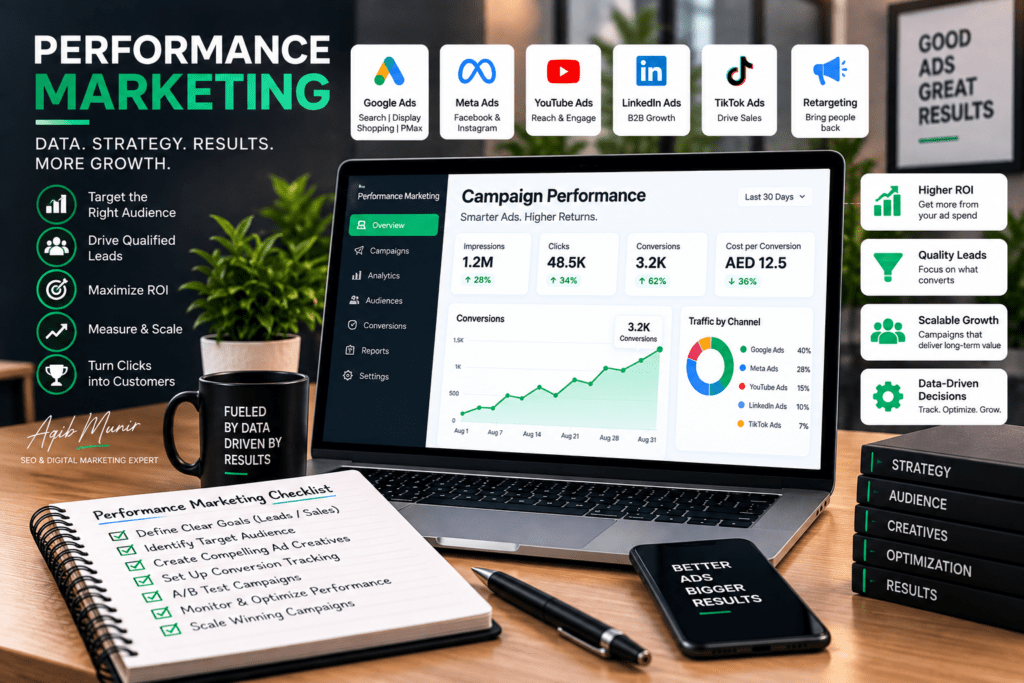
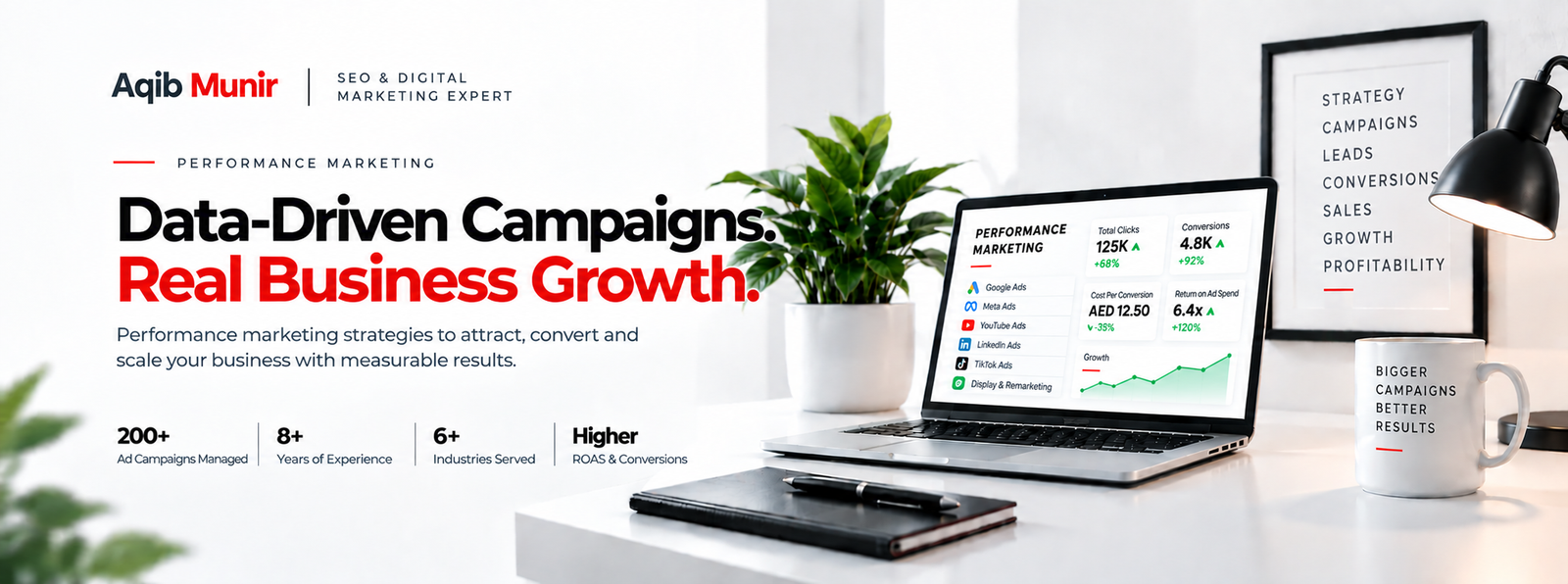
PERFORMANCE MARKETING
Paid Marketing Built for Measurable Growth.
I plan, manage and optimize performance marketing campaigns designed to reach the right audience, generate qualified traffic and improve conversions through continuous data-driven optimization.
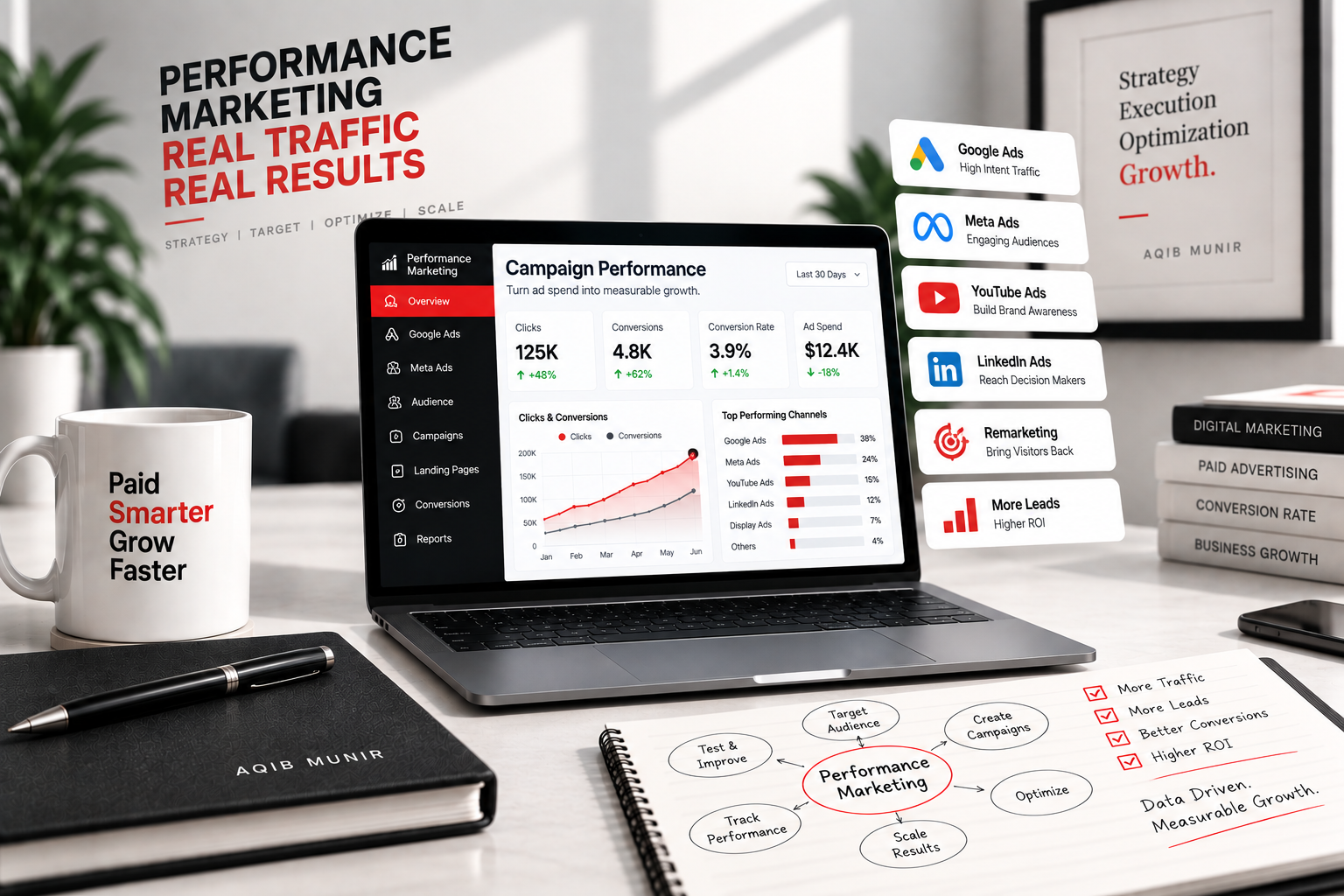
Performance Marketing
Target + Test + Optimize + Scale
PERFORMANCE FIRST
Every Campaign Should Have a Clear Business Objective.
Performance marketing is about more than launching advertisements. It requires the right audience, message, offer, landing experience and measurement framework.
I use a data-driven approach to paid marketing, combining campaign strategy, audience targeting, creative testing, conversion tracking and ongoing optimization.
The focus is on understanding what drives results and continuously improving campaign efficiency rather than simply increasing advertising spend.
Right Audience
Reach people who are more relevant to the product,
service or business objective.
Right Message
Align advertisements, offers and landing pages with
audience intent and expectations.
Continuous Optimization
Use campaign data to identify opportunities and improve
performance over time.
WHAT I DO
Building Campaigns Around Performance.
From campaign planning to optimization, I focus on creating a structured paid acquisition process.
01
Campaign Strategy
Define campaign objectives, audience segments, offers, channels and performance goals.
02
Audience Targeting
Research and structure relevant audiences based on intent, behavior, demographics and business requirements.
03
Google Ads & PPC
Manage relevant Google Ads campaigns including search, display, shopping and other suitable campaign types.
04
Campaign Optimization
Analyze performance and continuously refine targeting, keywords, bids, budgets, ads and campaign structure.
05
Creative & Message Testing
Test different advertising messages, offers and creative approaches to identify stronger opportunities.
06
Lead Generation
Build campaigns focused on generating relevant enquiries, leads and potential customers.
07
Conversion Optimization
Improve the journey from advertisement to landing page, enquiry and conversion.
08
Remarketing
Re-engage relevant audiences who have already interacted with a website, campaign or business.
09
Performance Reporting
Monitor meaningful campaign metrics and use performance insights to guide future optimization.
CAMPAIGN STRATEGY
Performance Marketing Is a Complete Journey.
Strong campaign performance depends on what happens before, during and after the advertisement click.
Target
Identify the audiences most relevant to the campaign and business objective.
Attract
Create advertising messages and offers designed to capture relevant attention.
Convert
Connect campaigns with relevant landing pages and clear conversion paths.
Optimize
Analyze results and improve campaign performance through structured testing and optimization.
MY PROCESS
From Campaign Planning to Continuous Optimization.
A structured process helps create campaigns that can be measured, tested and improved.
STEP 01
Understand
Understand the business, offer, audience, competition and campaign objective.
STEP 02
Research
Research keywords, audiences, competitors, offers and relevant advertising opportunities.
STEP 03
Build
Structure campaigns, targeting, ads, budgets and conversion tracking.
STEP 04
Launch
Launch campaigns with appropriate tracking and performance measurement in place.
STEP 05
Analyze
Review campaign data, audience behavior, conversions, costs and other relevant performance indicators.
STEP 06
Optimize
Test, refine and scale the elements that contribute to stronger campaign performance.
PERFORMANCE LOOP
Plan. Launch. Measure. Improve.
Performance marketing is an ongoing optimization cycle, not a one-time campaign launch.
Research
→
Strategy
→
Target
→
Launch
→
Measure
→
Optimize
PAID MARKETING CHANNELS
Using the Right Platform for the Right Objective.
The appropriate advertising channel depends on the audience, offer, intent and campaign objective.
Google Search
Capture high-intent users actively searching for relevant products or services.
Google Display
Reach relevant audiences across Google's display network for awareness and remarketing objectives.
Google Shopping
Promote e-commerce products to users researching and comparing products online.
Performance Max
Use Google's cross-channel campaign capabilities where they align with the business objective and data available.
Social Advertising
Reach targeted audiences through suitable social advertising platforms and campaign formats.
Remarketing
Reconnect with relevant users who have previously interacted with the business.
WHAT I MEASURE
Focus on Metrics That Help Make Better Decisions.
Different campaigns require different success indicators. I focus on the metrics that are relevant to the campaign objective.
CTR
Click-Through Rate
CPC
Cost Per Click
CPL
Cost Per Lead
CPA
Cost Per Acquisition
CVR
Conversion Rate
ROAS
Return on Ad Spend
Quality
Ad & Landing Page Relevance
Revenue
Business Outcome
WHAT I CAN MANAGE
A Structured Performance Marketing Setup.
Depending on the project, my involvement can cover strategy, campaign management, tracking, optimization and reporting.
✓
Performance marketing strategy
✓
Campaign planning and structure
✓
Audience and keyword research
✓
Google Ads and PPC management
✓
Performance Max campaign management
✓
Google Shopping campaigns
✓
Remarketing strategy
✓
Ad and creative testing
✓
Conversion tracking review
✓
Landing page recommendations
✓
Campaign optimization
✓
Performance reporting and insights
Ready to Turn Ad Spend Into Better Performance?
Let’s build a paid marketing strategy around your audience, business goals and measurable opportunities.