
OFF-PAGE SEO
Off-Page SEO That Builds Real Authority.
I build a strategic off-page SEO foundation that helps strengthen website authority, improve online visibility, and earn relevant signals from trusted sources across the web.
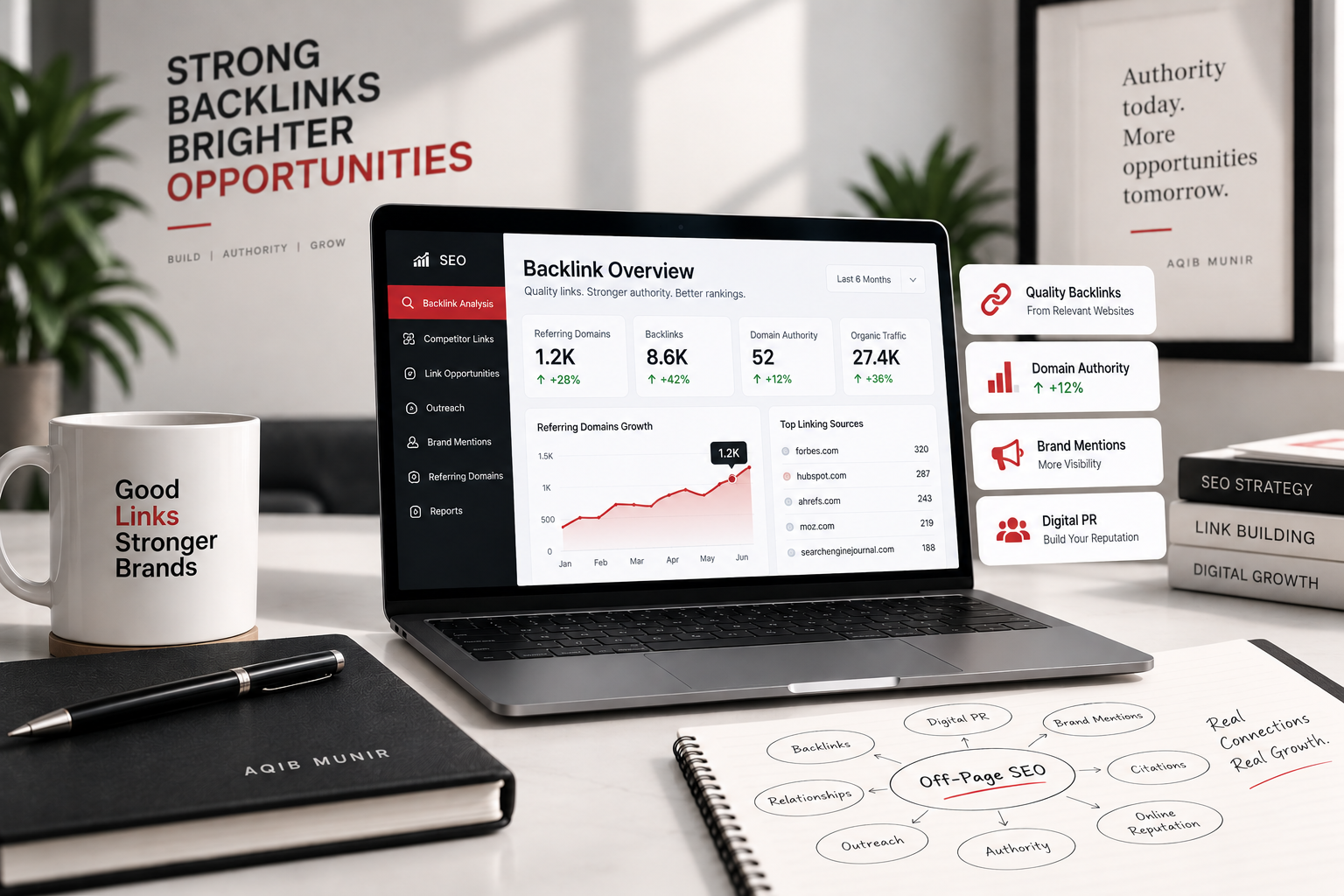
BEYOND YOUR WEBSITE
SEO Authority Is Built Beyond the Page.
Off-page SEO focuses on the signals your website earns outside its own pages. These signals can influence how search engines understand your website's authority, relevance, trust, and reputation.
I develop off-page SEO strategies around relevant link opportunities, digital PR, brand visibility, citations, mentions, and relationship-driven authority building rather than relying on low-quality or artificial backlink volume.
01
Relevance
Focus on links, mentions, and sources that are relevant to your industry and audience.
02
Authority
Strengthen the credibility and authority of your website through quality external signals.
03
Trust
Build a stronger online presence through genuine and sustainable SEO practices.
MY PROCESS
From Backlink Analysis
To Authority Growth.
I use a research-driven approach to understand your current backlink profile, competitor landscape, industry opportunities, and the types of external signals that can support your SEO strategy.
01 — AUDIT
Analyze the Backlink Profile
Review existing backlinks, referring domains, anchor text, link quality, authority signals, and potential risks.
02 — RESEARCH
Study the Competition
Analyze competitor link profiles to understand where their authority comes from and identify relevant opportunities.
03 — STRATEGIZE
Build the Link Strategy
Prioritize relevant link opportunities according to authority, relevance, context, and business value.
04 — OUTREACH
Develop Opportunities
Use targeted outreach, relationship building, content, and relevant external opportunities to earn visibility.
05 — STRENGTHEN
Build Brand Authority
Support the wider digital presence through relevant mentions, PR opportunities, citations, and useful content.
06 — MONITOR
Track & Refine
Monitor new links, referring domains, authority signals, competitor activity, and overall organic performance.
STRATEGIES
Off-Page SEO for Different Business Needs.
Your link and authority strategy should reflect your website, industry, competition, audience, and business objectives.
01 / LOCAL
Local Businesses
Build relevant local citations, mentions, partnerships, and location-based authority signals.
02 / E-COMMERCE
E-Commerce Websites
Strengthen product, category, brand, and overall domain authority through relevant external opportunities.
03 / SERVICES
Service Businesses
Build authority around important service pages and commercially valuable topics.
04 / B2B
B2B Companies
Focus on industry publications, partnerships, expert content, and relevant business relationships.
05 / CONTENT
Content Websites
Promote valuable resources and develop opportunities for natural references and editorial links.
06 / COMPETITIVE
Competitive Niches
Identify authority gaps and prioritize opportunities that can help your website compete more effectively.
WHAT YOU GET
A Strategic Approach to Authority Building.
Depending on your website and requirements, my off-page SEO work can include analysis, strategy, outreach, authority building, and ongoing monitoring.
Backlink profile analysis
Competitor backlink research
Link opportunity research
Link building strategy
Relevant outreach
Digital PR opportunities
Brand mention opportunities
Local citation analysis
Anchor text analysis
Referring domain analysis
Link quality monitoring
Off-page SEO recommendations
READY TO BUILD AUTHORITY?
Is Your Website
Earning the Right Signals?
Let’s analyze your backlink profile, competitors, and off-page opportunities to build a stronger and more sustainable SEO strategy.
Let’s Talk About Your SEO Strategy →